
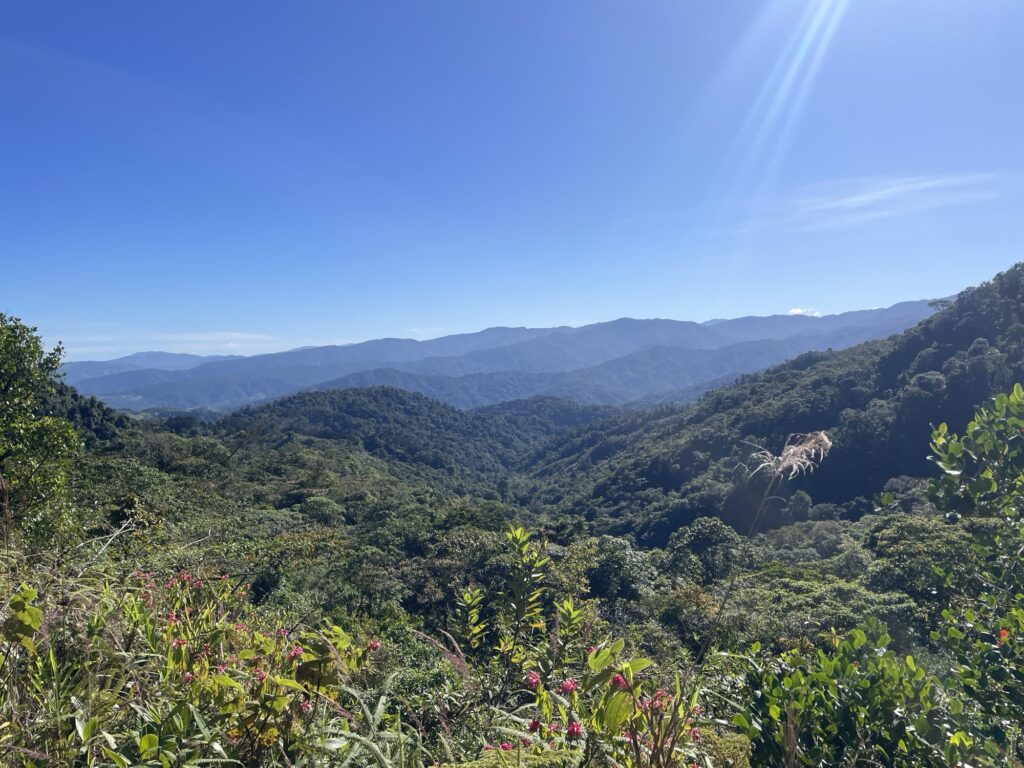
Hiking Camino de Costa, 1-11/12 2025
1 December — Monday
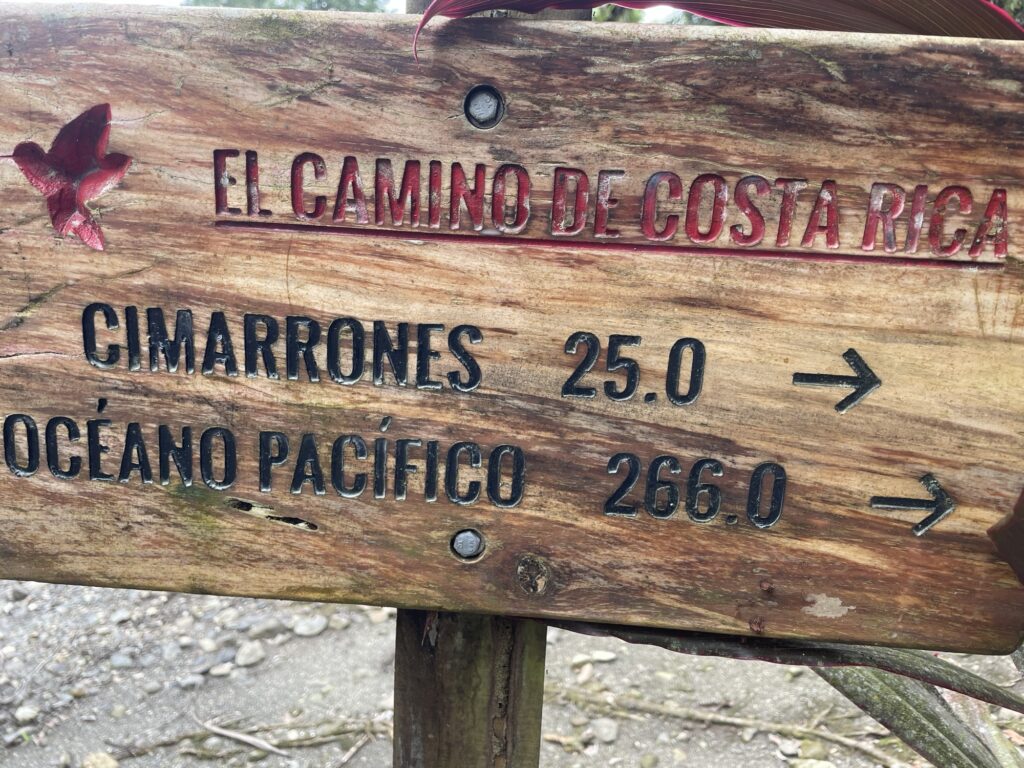
Camino de Costa Rica is Costa Rica’s only long distance hiking trail. It starts at the Caribbean coast and finishes at the Pacific coast
The initial section of the trail is slightly complicated, starting with a boat ride on the Parismina river, then a short beach walk before another river boat ride. After this is all said and done, the actual hiking starts at Muelle Goshen. From Muelle Goshen, it is about 250 km of hiking according to my estimates, but the signpost claims that it is 266 km.
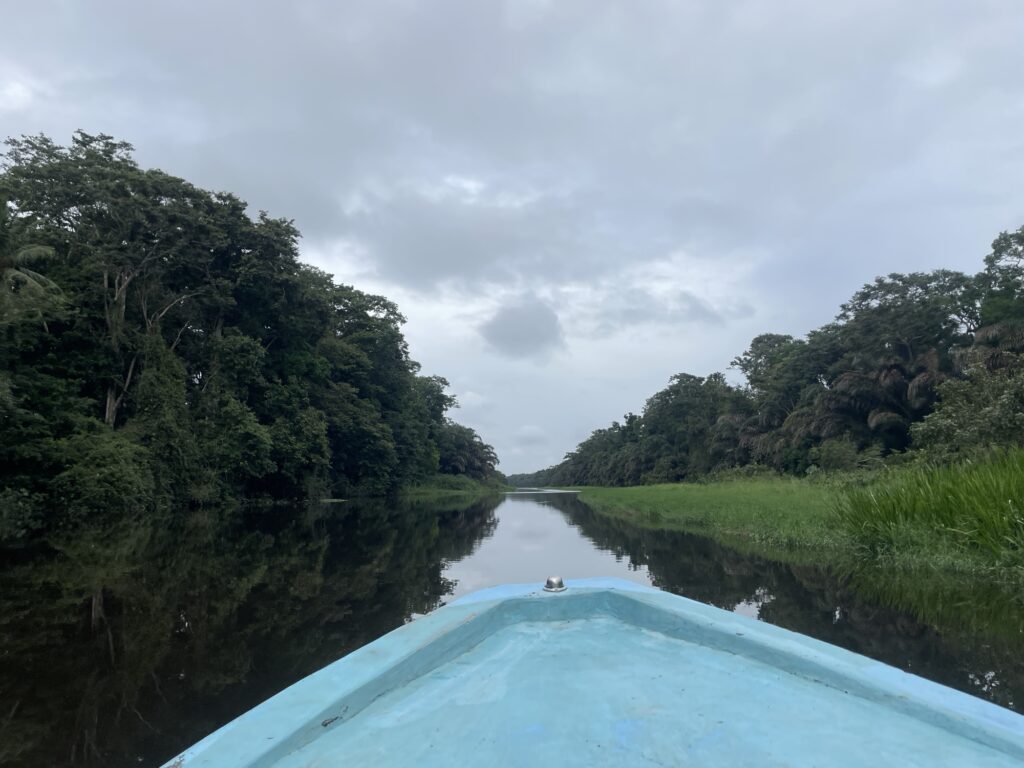
The Pacuare Reserve, where I just volunteered for a week, is not far from Muelle Goshen and I have arranged with the reserve to be dropped off there in the morning. In other words, I’m not doing the official boat ride section but another one. I’m still hiking ocean to ocean.
Everyone writes very positively about the Camino de Costa Rica online. I’m, however, a bit skeptical as it seems to be very much road walking. Still, this is the best Costa Rica has to offer in terms of multi-day hikes — excluding Corcovado, but that is limited to three (or four) days by law and costs half a fortune.
At 08:30 the speed boat roars, full speed ahead all the way to Muelle Goshen. This I like, and it was the best part of the whole day.
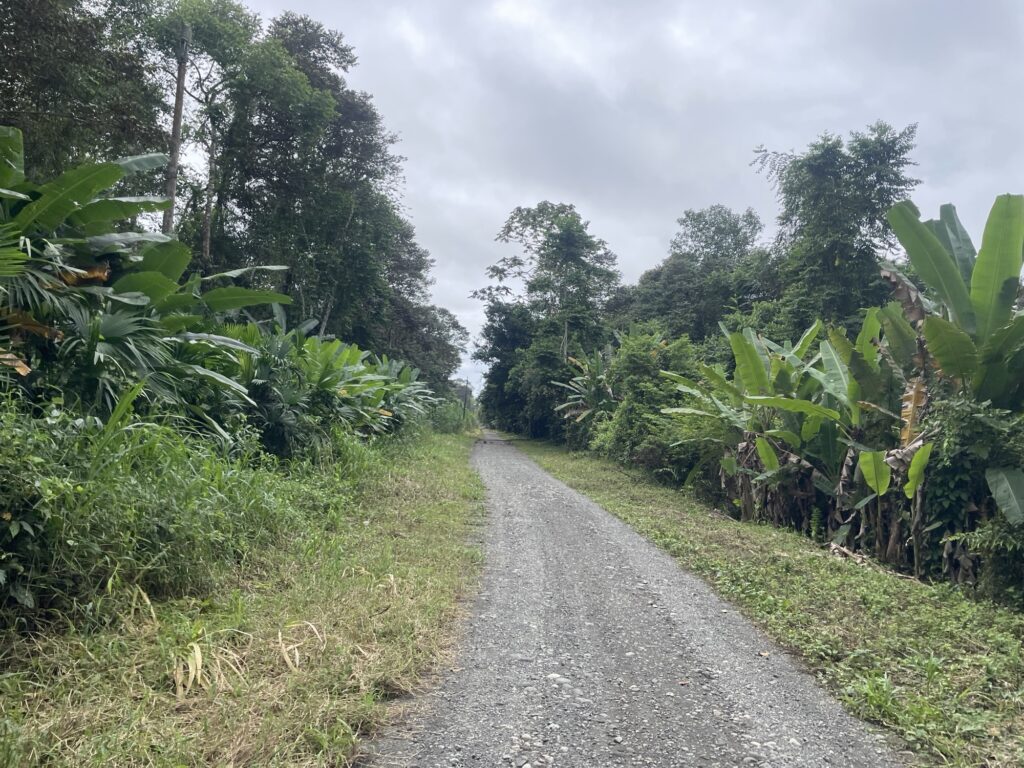
At Muelle Goshen I start the long dirt road hiking. My fear of the Camino being too much road walking remains.
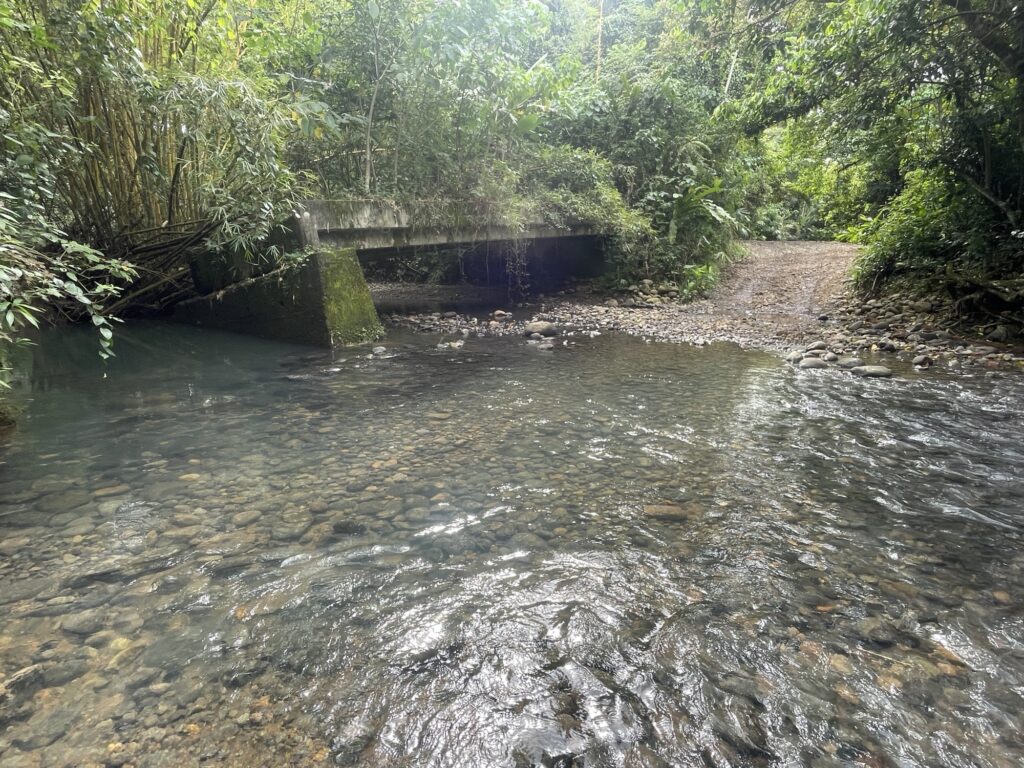
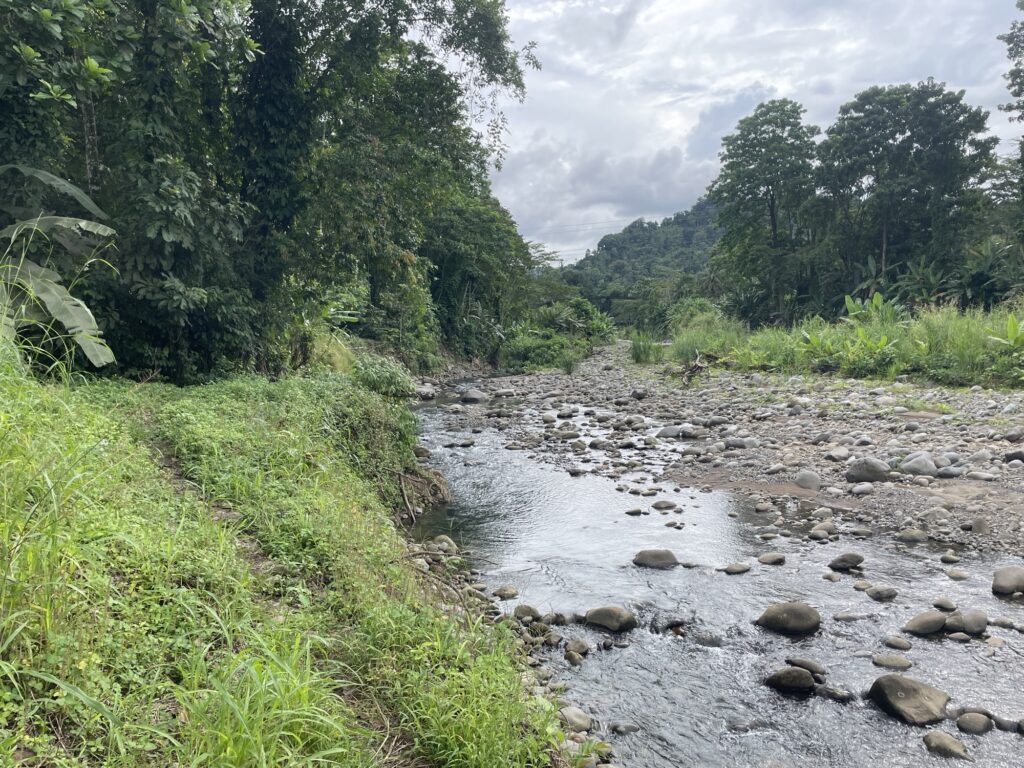
I finish section 1 and check in at Casa Tamandua, a lovely place with really good and clean amenities that offers luxurious accommodations but also basic camping services. That is also one downside with the Camino, you cannot camp freely. At least I’m tenting again. Well sort of, their campsites are not 100 precent compatible with my tent.
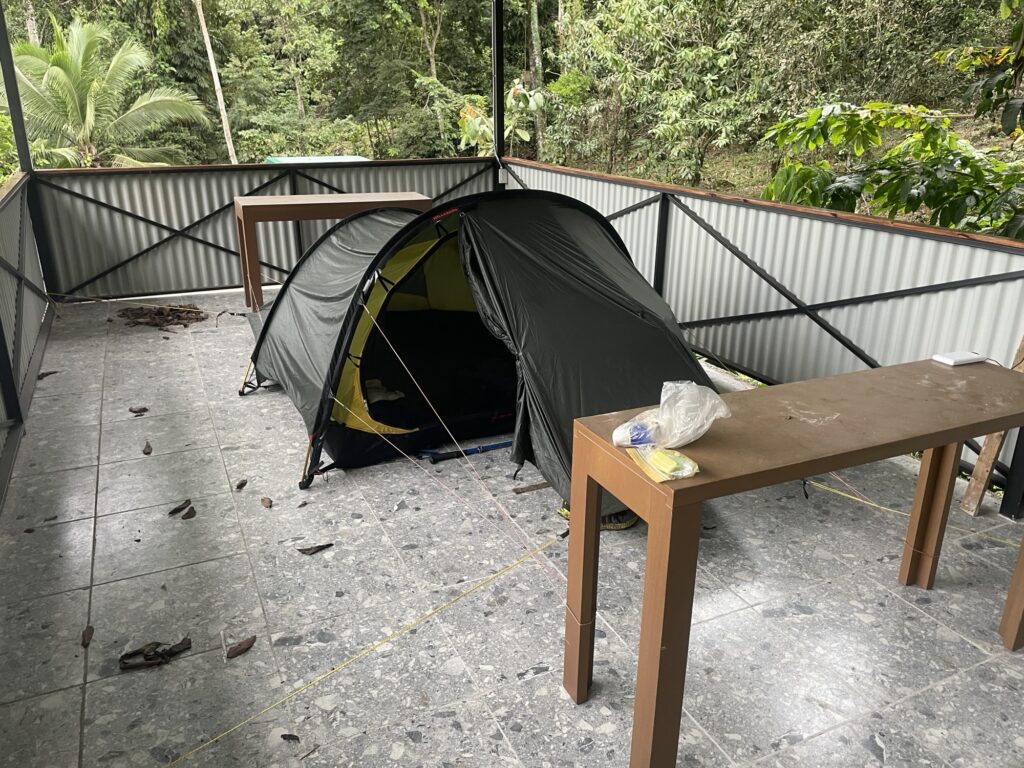
The staff at Casa Tamandua are extremely welcoming and nice. One of the guys that runs the place was part of creating the Camino about 20 years ago. He reassures me that it will get much better. I end off chatting with him and another guy for most of the evening. It was a good time.
Easy day today with only 4.5 hours of hiking. Tomorrow will be even easier as I only have 15 km to cover as I cannot go further. Another downside with the Camino is that an indigenous guide is required for section 3 and 4 as it crosses the Cabecar Indigenous Territory, and I have my guide booked for December 3. After section 4, I’m free and can start pulling doubles or even triples.
2 December — Tuesday
Slightly better conditions today, but my worries about this being a road hike remains. The section starts with a climb on a mud road. I think I’m lucky that it did not rain tonight or the day before, otherwise this could have been very messy.
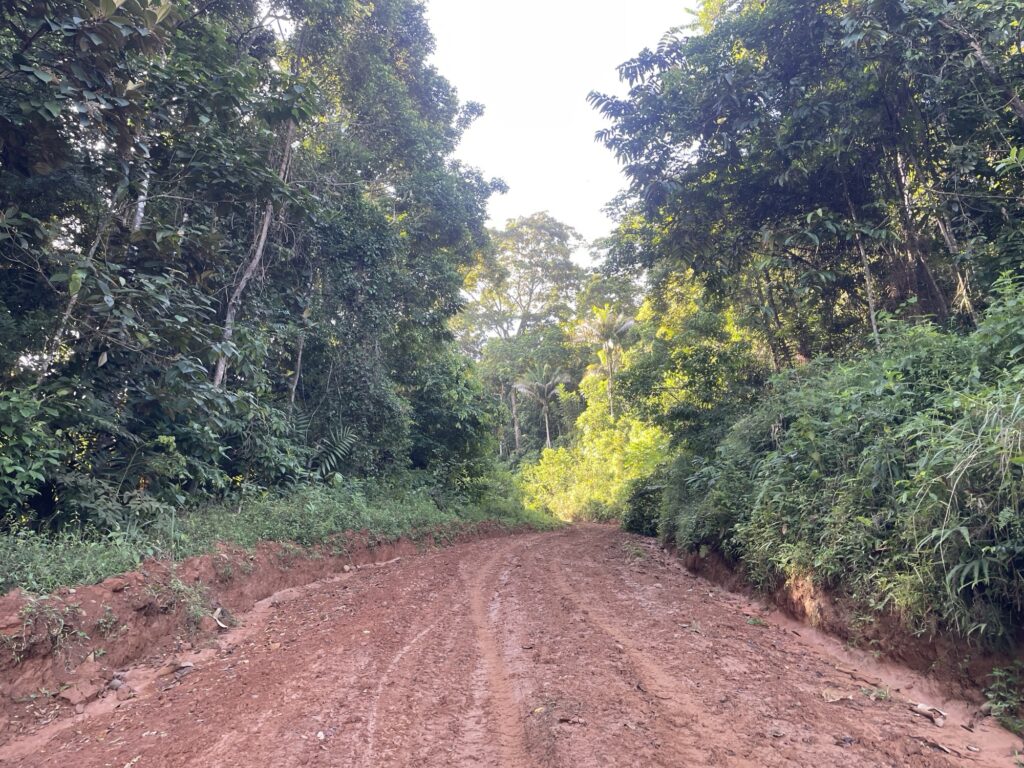
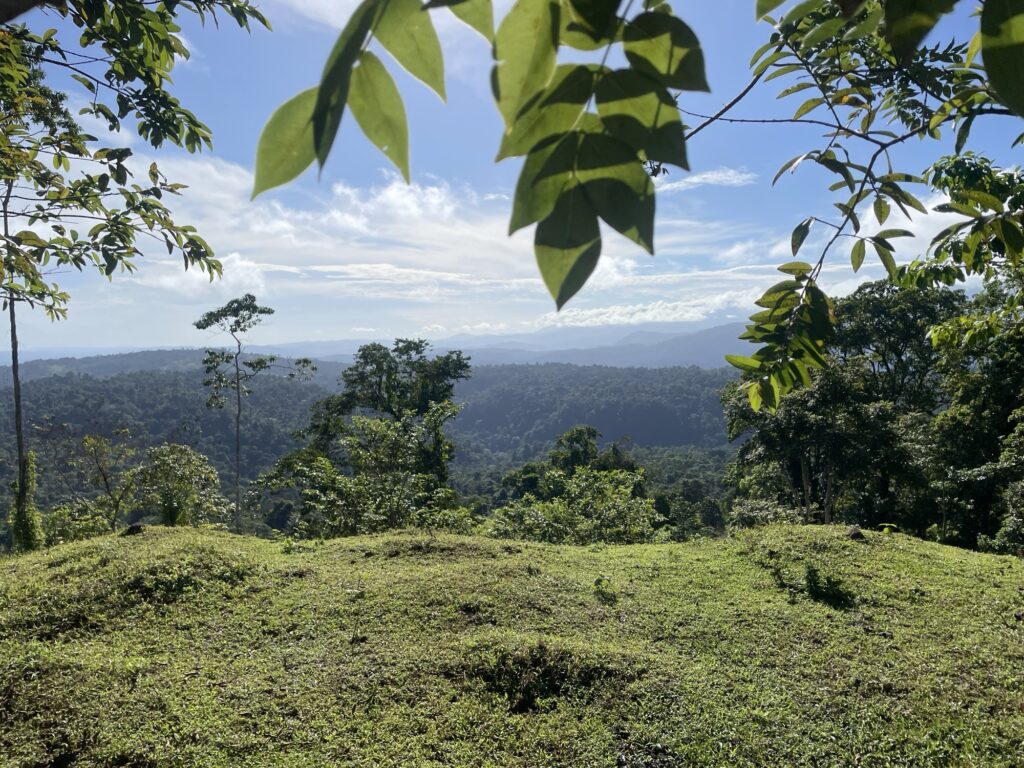
The section then transitions to a trail/ATV road, still very muddy, before ending with a stretch of asphalt.
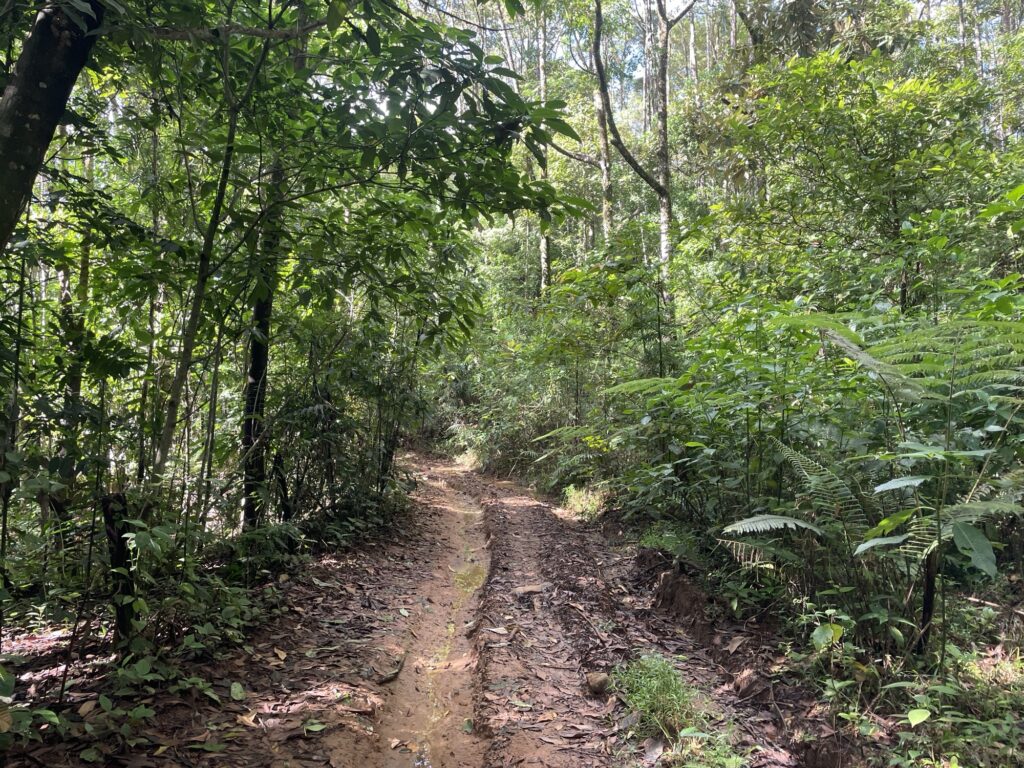
At the Nairi Awari campsite I’m shown to my tent site, which apparently comes with a tent included.
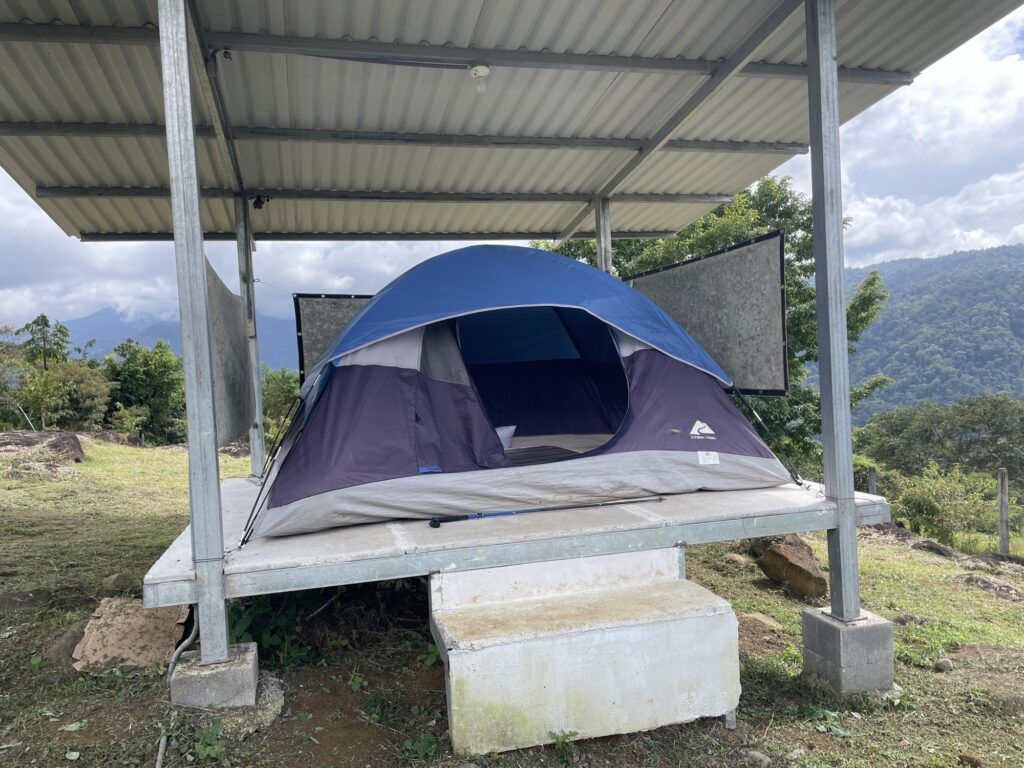
The hike might not be top quality but it was a pleasant and tranquil day, with little to no people out on the trail. Later in the afternoon three South Africans and their three guides join me at the campground. The South Africans are doing a guided tour of a small section of the Camino. And they too will embark on stage 3 tomorrow. I sure hope section 3 and 4 are good sections.
It was nice with some company in the evening to talk to. Especially the guides, they were extremely nice and helpful. They offered me the leftovers of the dinner they had prepared, which was really good.
I cannot say that I’m particularly tired so far. I do, however, have one slightly pressing problem. My feet’s are shredding skin. I assume all the turtle watching, thereby constantly having moist feet, the preserve area itself was probably the most humid place I ever been to as well, is to blame. I now have a couple of open wounds on my toes
3 December — Wednesday
My guide wanted to sleep-in so we did not leave until 7:30, which is rather late with Costa Rican standards.
Section 3 and 4 of the Camino is a proper jungle trail, but it is not very challenging despite people online trying make it out to be so. The first 2 km are admittedly very muddy and slippery, poles are advised, but the rest is relatively easy trail walking, sure it is still muddy but not that muddy.
Most of the trail runs under thick canopy providing much welcomed shade from the sun. There are some indigenous communities along the start and end of section 3 but mostly section 3 is completely wild.
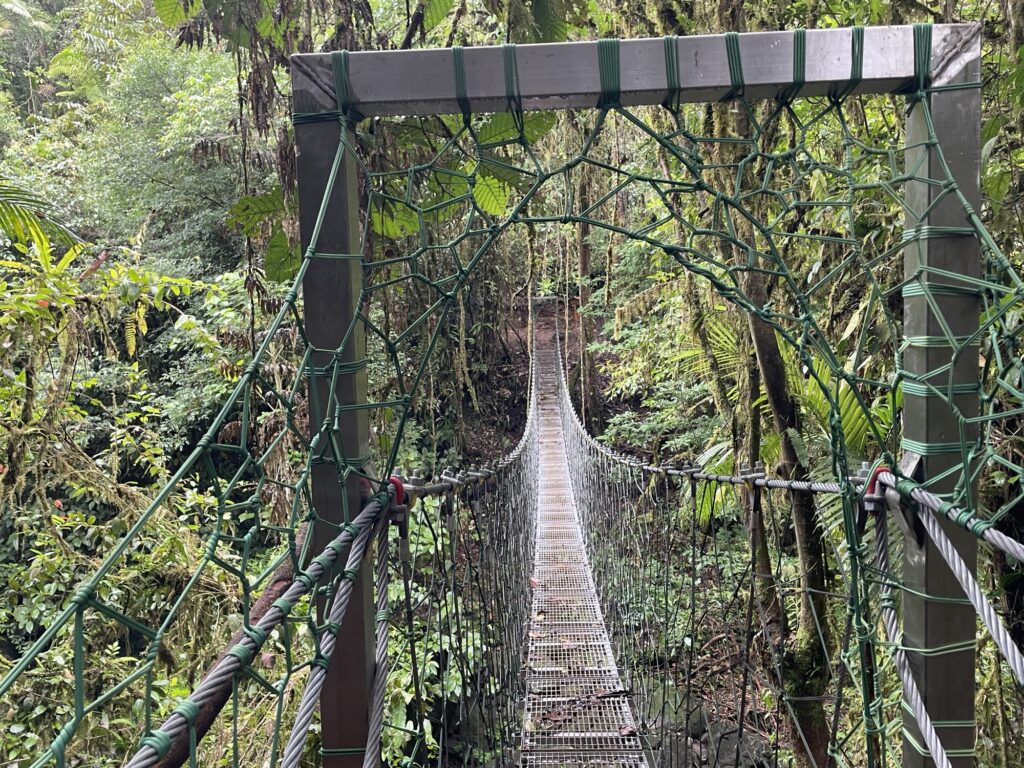
My favorite part of the day was the river crossings. At the first river the indigenous community had built a suspension bridge and at the second much larger crossing they had built a sort of manual lift. You pulled yourself across using a rope, this was fun.
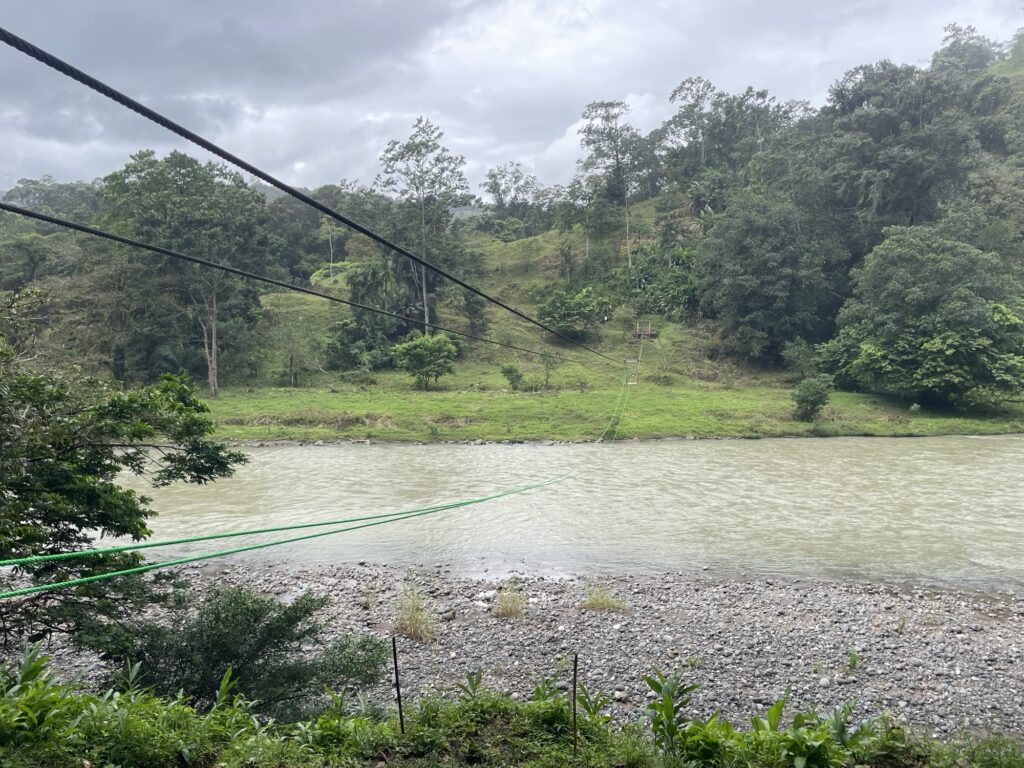
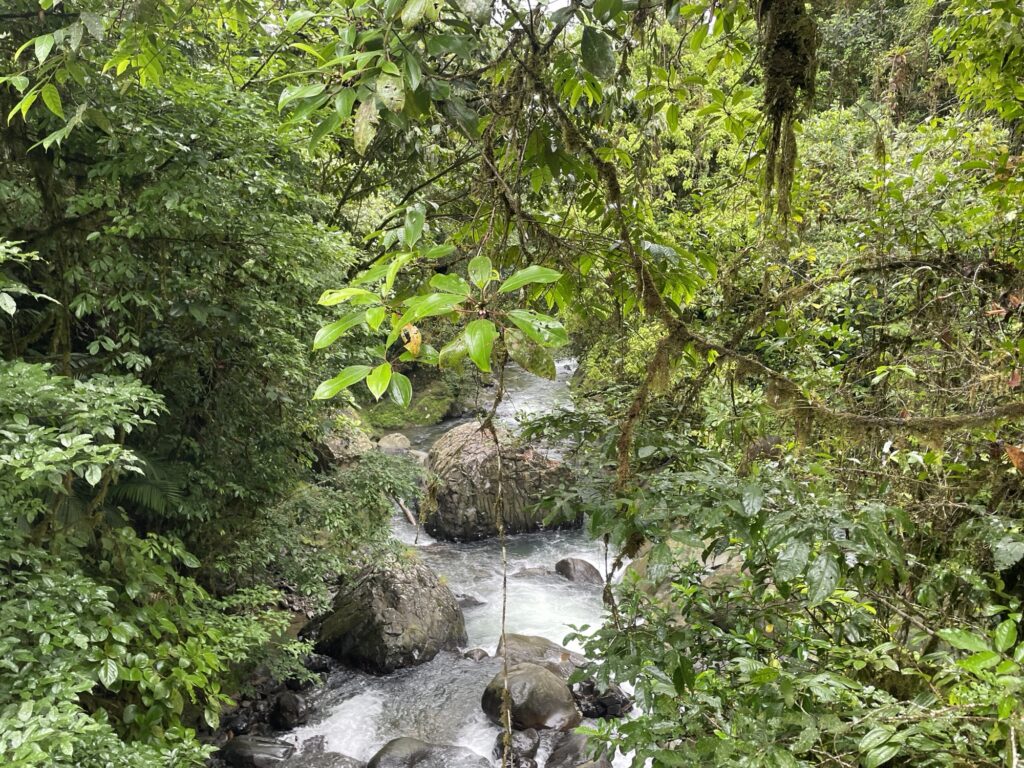
At Tres Equis (end of section 4) I part with my guide and walk straight to the supermarket. I have been starving for some good food for a while now.
After a massive meal, I decide to walk stage 5 as well. Stage 5 mostly runs on a dirt road with little to no houses or traffic. The surroundings are kinda nice, but the road is constantly lined with barb-wires which makes visits to the “restroom” slightly inconvenient.
According to the FarOut guide that I follow there was suppose to be an accommodation with tent-sites at the end of stage 5. They did, however, not have tent-sites. Instead I’m offered a private room in the families house, and it included dinner and breakfast. I just had a massive meal, but I guess there is room for more. There is also a German girl staying here. She is doing a one year high school exchange. Apparently the schools are very relaxed here in Costa Rica compared to Europe.
The accommodation was nice and the food great, a perfect Costa Rican home-cooked meal, but I feel I’m not getting much use for my tent. I’m starting to feel like it is unnecessary weight. One a positive note, it seems my feet’s are holding up nicely now that I have left the worst moisture behind me. One a negative note, I’m starting to experience chafing at a very unpleasant bodily place with only 11 sections to go :).
4 December — Thursday
Today I have my eyes set for a campsite that requires 44 km of hiking, therefore, I start hiking at dawn.
Stage 6 and 7 is similar to stage 5, you mostly hike on minor roads not well traveled and some forest roads. Not too exciting but the scenery is nice.
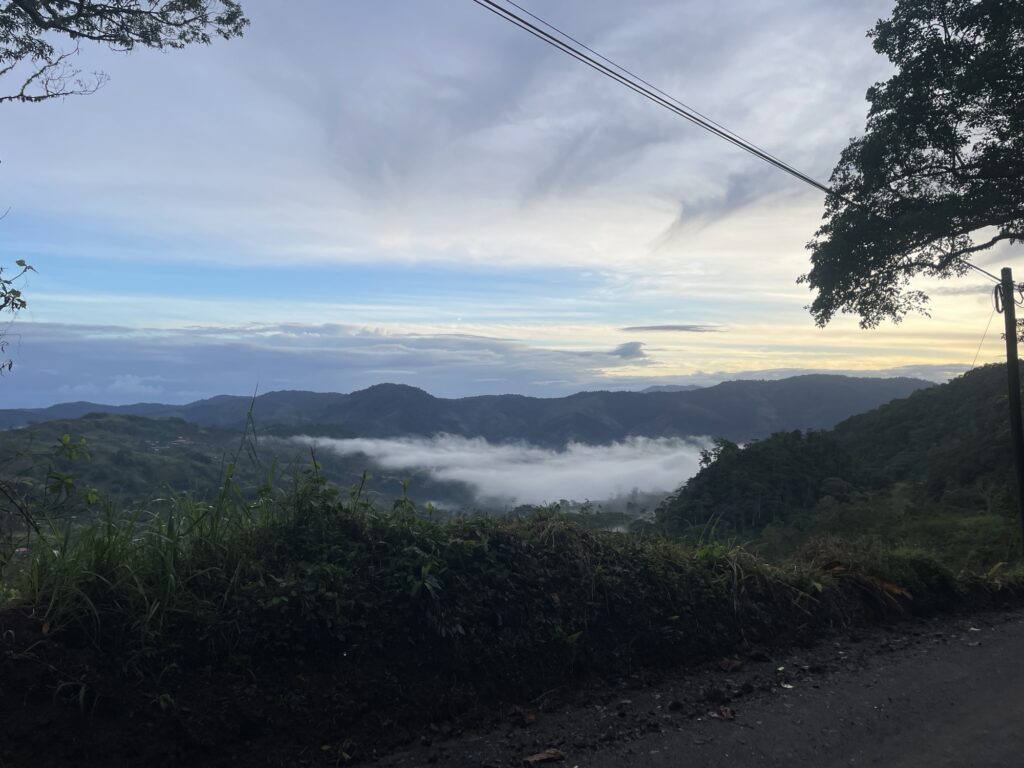
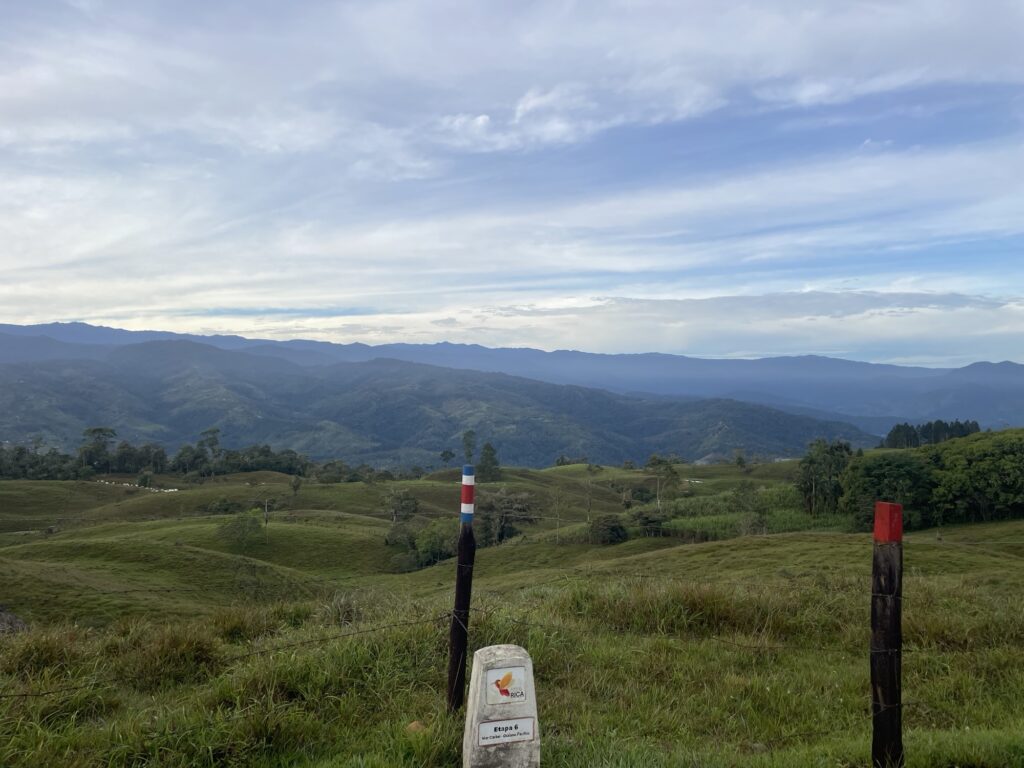
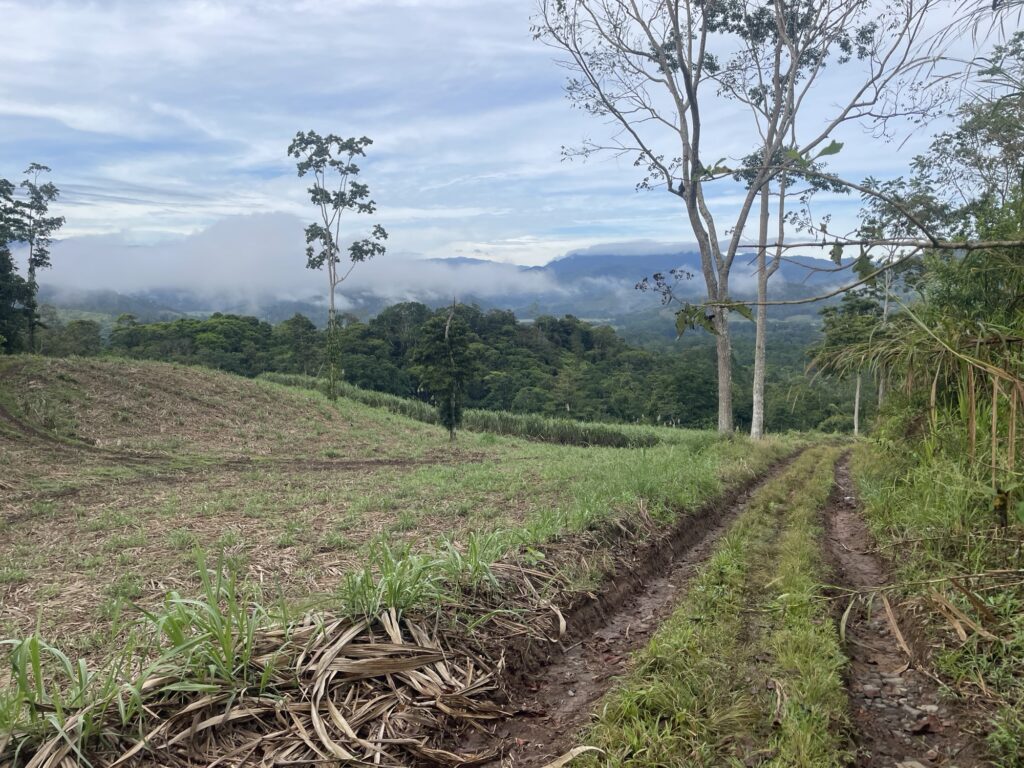
I make a couple of wrong turns, the trail is not well sign-posted, and tack on some extra kilometers.
At the town of Pejibaye, I send a message to the campsite to let them know that I’m coming. They reply with that they are closed. Great. My only option now is to check-in at a hotel close to Pejibaye. Not that great of progress today.
With the minor setback today, I decide to be a little more proactive and contact a couple of campsites along the trail to see if they are open. It seems that I will be able to actually camp tomorrow, but I have learned to keep my hopes low. Not everything is what it seems to be here in Costa Rica.
My feet’s are now feeling good and the chafing is not getting worse.
5 December — Friday
Right, 40 km to go to what I’m hoping actually is a proper campsite this time. Fingers crossed.
Section 8 of the Camino is pretty good. You first hike on deserted dirt track before switching to old ATV track/trail. The hiking is good and so are the sceneries.
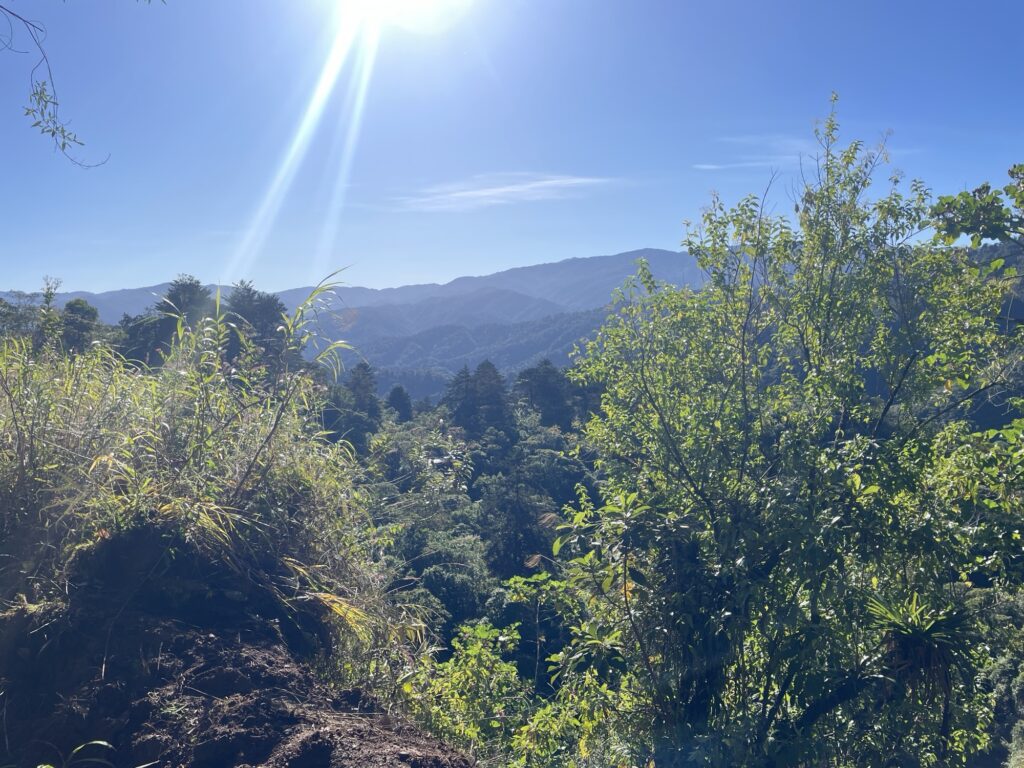
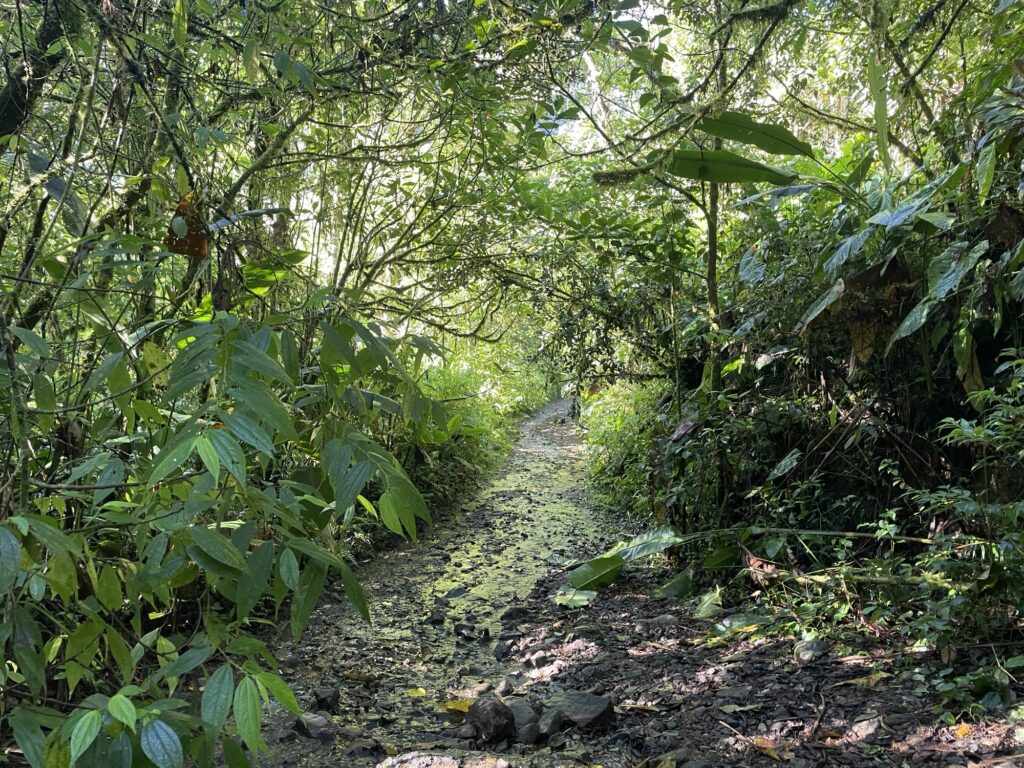
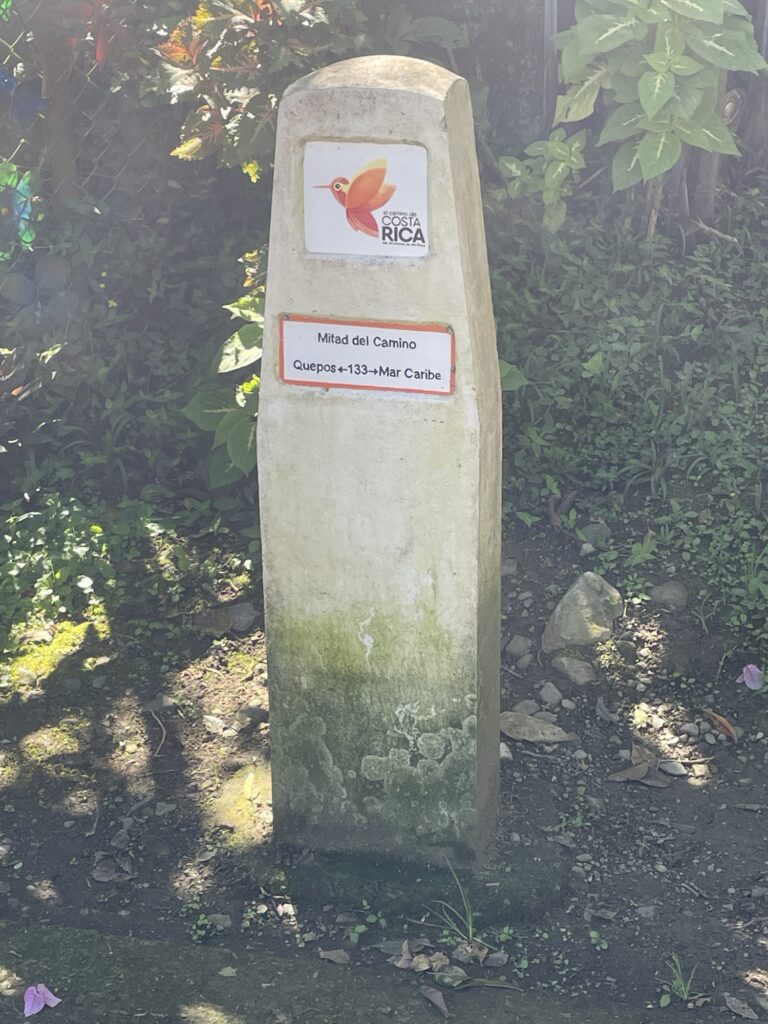
Section 9, however, is mostly a stinker. Early on Section 9 I pass the halfway mark of the Camino de Costa Rica. Not much to go now.
At the small town of Navarro I finish Section 9 and go to my booked accommodation. I get to camp :). Well, once again, sort of.
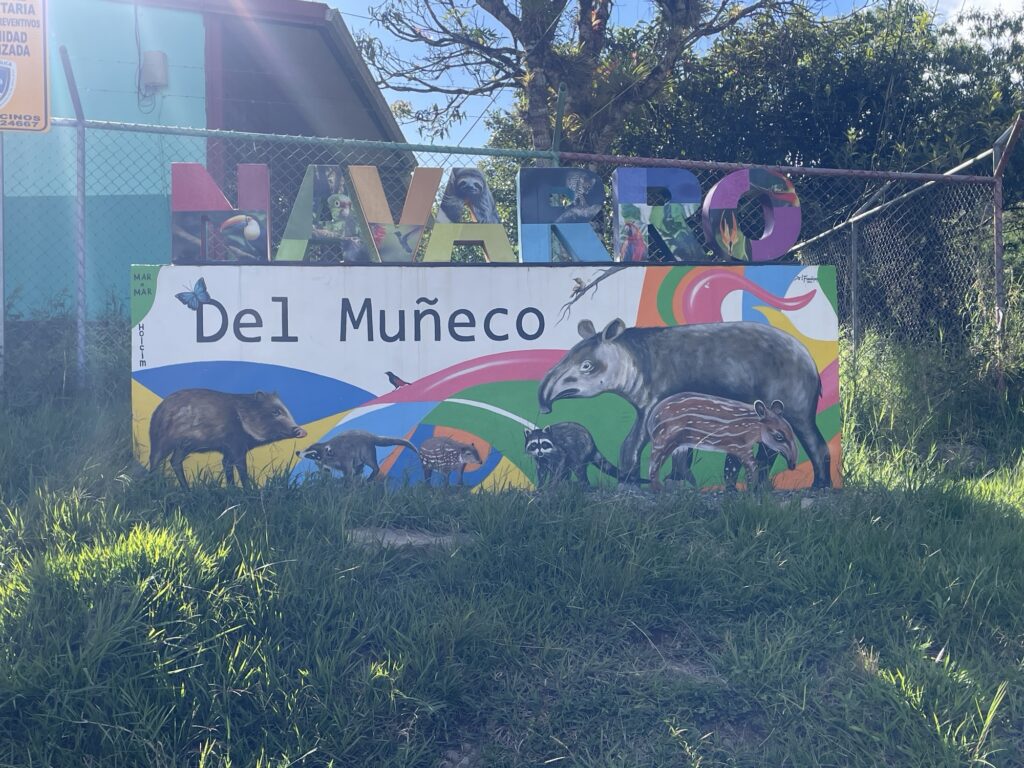
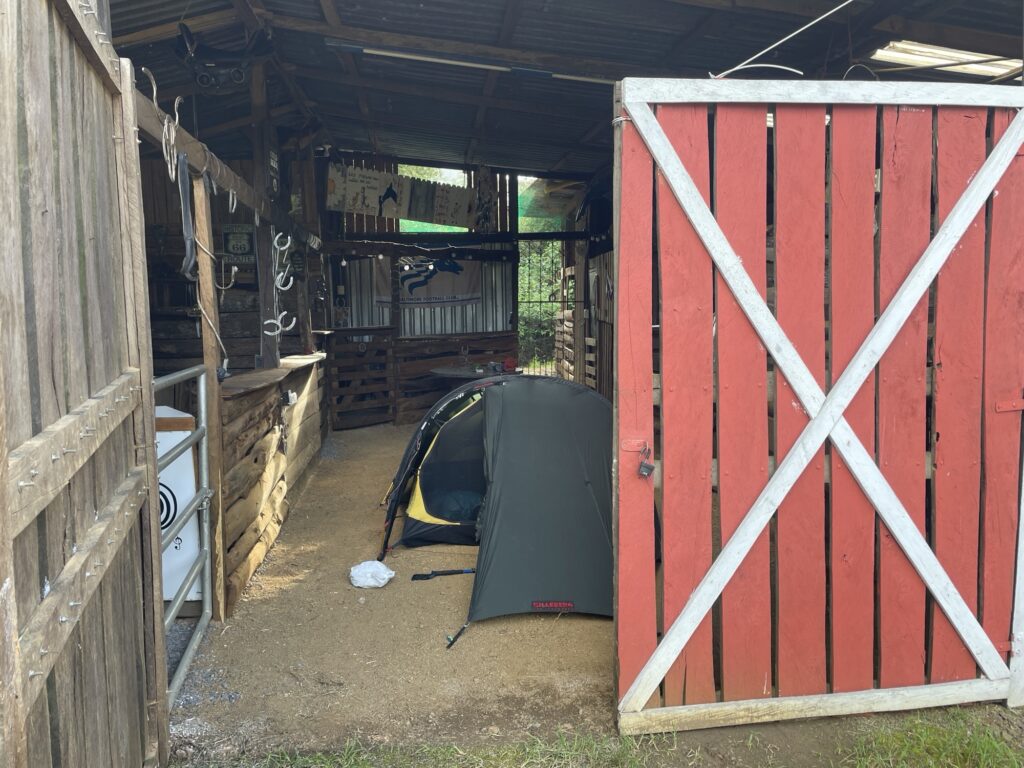
At the “campsite” I speak a bit with Carlos who runs the place. He suggests that I take an alternative route that runs through a nearby nature reserve and connect with the Camino at the end of stage 10. Why not, if it is so much better than the ordinary routes as Carlos claims it to be it is definitely worth it.
During the day I have been a bit more proactive. I have a campsite (whatever that might mean) booked for tomorrow and likely another one for Sunday as well. I reckon I will finish the Camino on Monday and thereby the schedule is determined, no more planning.
6 December — Saturday
As Carlos suggested I take the route that runs through the nearby nature reserve, Bosque Nubos. It is a good trail, surrounded by dense jungle and no guides required. Best section so far, and more or less guaranteed to be the best section of the entire Camino de Costa Rica.
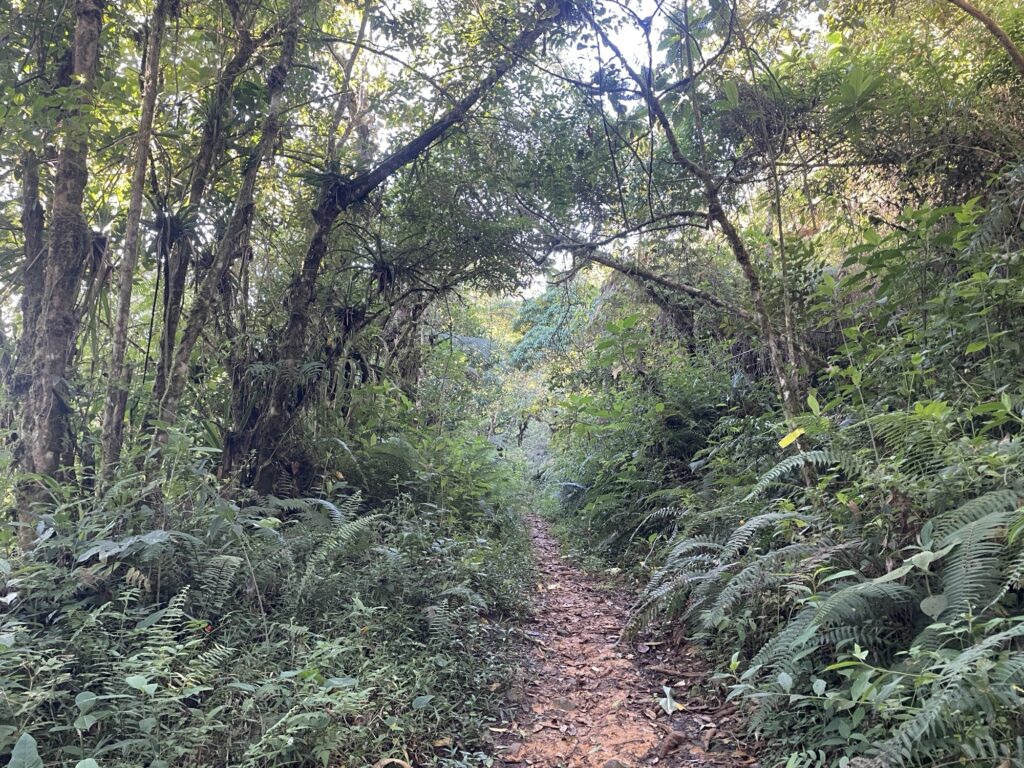
Since it is a nature reserve there is a fee associated with hiking there, but when I passed the entrance there where no-one around.
Apparently, the route I just hiked was part of the original Camino de Costa Rica. I wonder why they changed it.
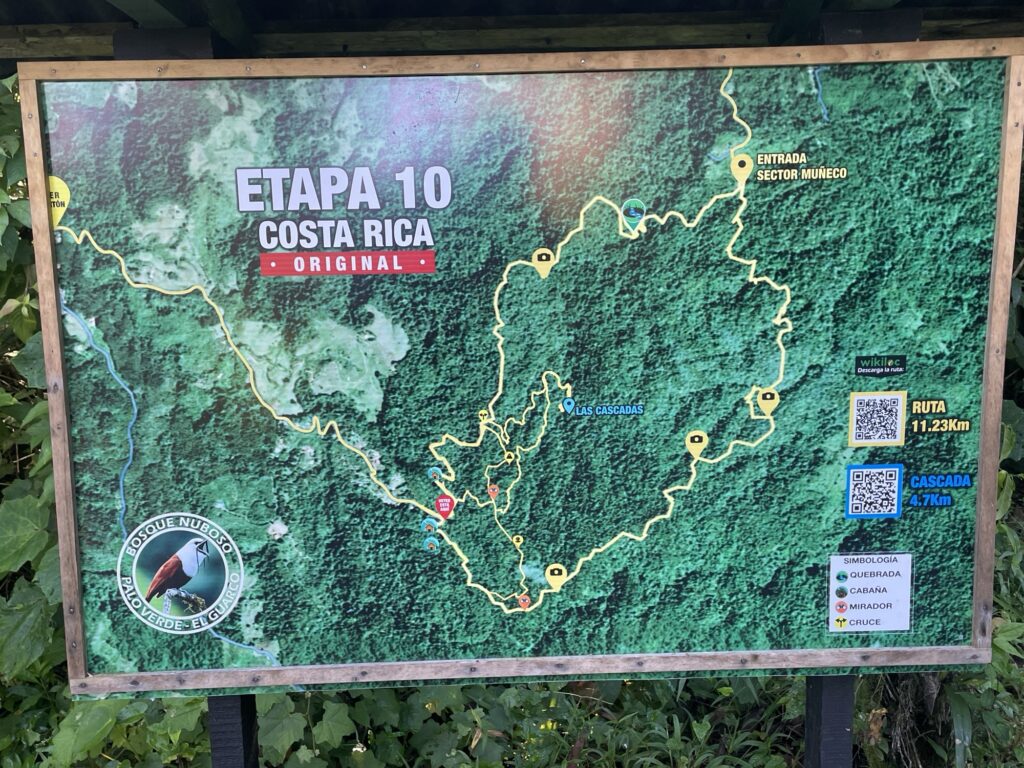
When leaving the reserve there is supposed to be, according to the map, a trail that connects to section 11. I couldn’t find it. Instead I have to take a considerable detour to connect with section 11, when I finally do connect I look for the supposed trail from the other direction. Sure enough, there were clearly remnants of a now almost overgrown trail. I suppose this might have been part of the original Camino route, and now when no one is hiking it anymore it has become overgrown and lost.
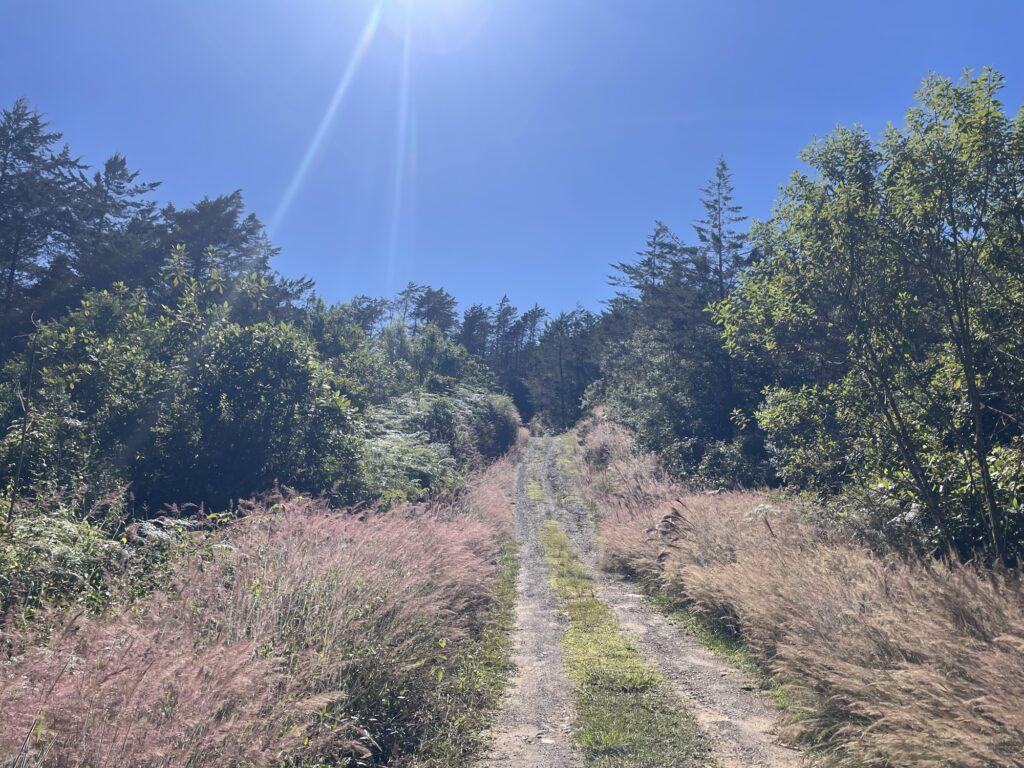
Section 11 is a relatively short but steep section that runs on small dirt/forest roads surrounded by forests. It was one of the better sections, partly because there was an elderly gentleman selling delicious homegrown fruits along the road.
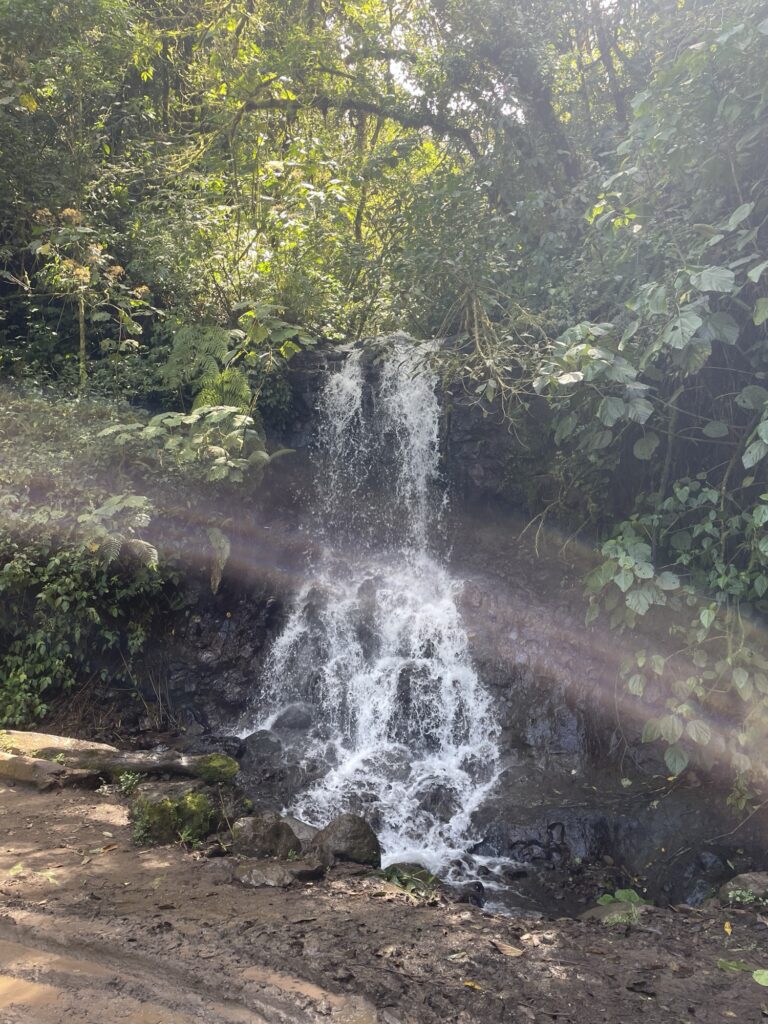
Considering this is Costa Rica, one thing that has been bothering me is where is all the waterfalls? Well, section 11 finally provides one.
Continuing on section 12, I almost immediately pass the highest point along the entire Camino. Now it is all downhill from where, both figuratively and literally. Section 12 was a bit a stinker. However, I finally got the opportunity to pitch my tent properly.
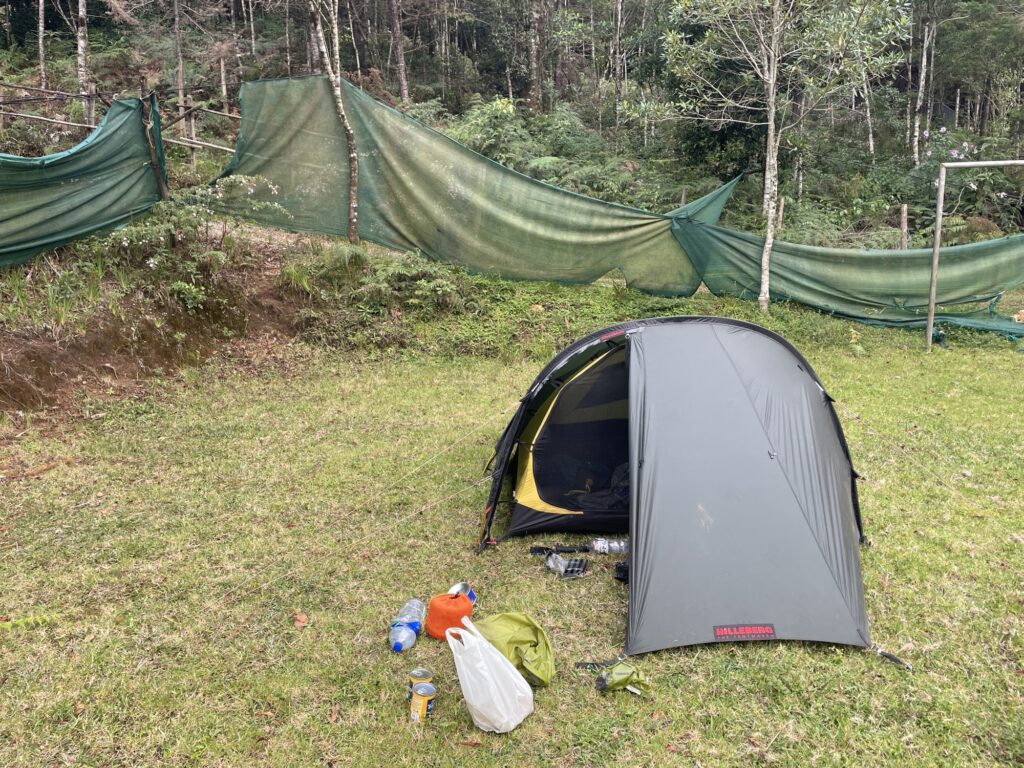
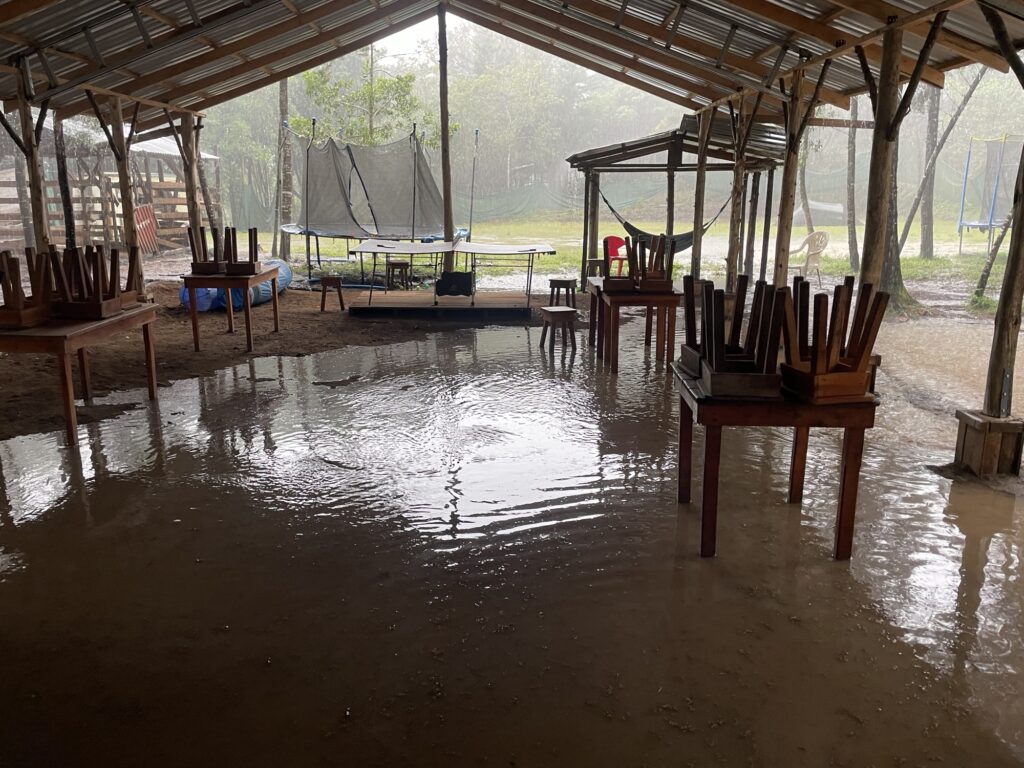
Shortly after I pitched my tent, the mother of all rainfall abruptly started. One of the persons managing the campsite suggests that I should move my tent to the under-roof dining hall. Knowing that my tent has the high ground, I respond with, “nah it is fine my tent is built to withstand rain.” And it is lucky I did considering the dining hall is flooded a couple of minutes later.
7 December — Sunday
A slightly friskier morning today given the elevation and the night’s heavy rainfall.
I rapidly finish section 12 and continue along section 13, which is surprisingly exhausting. The whole section is either steep upwards or steep downhill, no flats. Overall it is a pretty boring section, walked on asphalt or dirt road through various plantations.
Section 14 is a long gentle and easy continuous downhill. The whole section more or less runs on a dirt road carved into the side of the mountain. There are no houses and not much traffic along the section. I could imagine that scenic wise this is actually a pretty good section. But image is all I can do as I walk it during heavy rainfall and thick clouds.
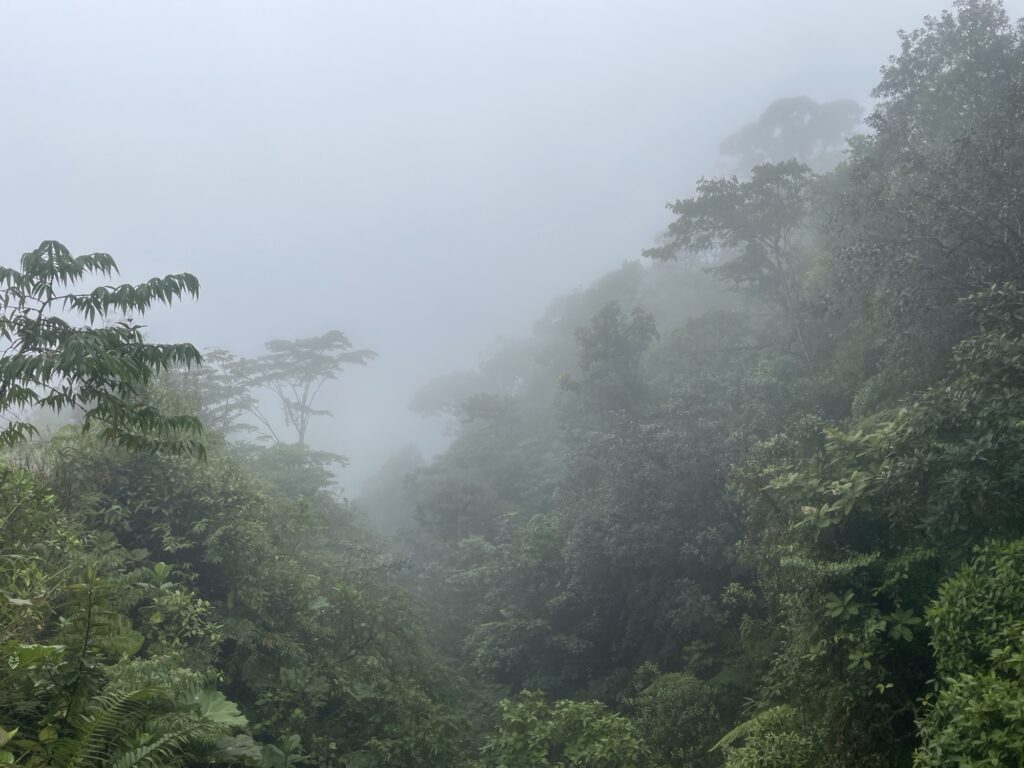
Once again I get to tent, or almost. The views from the “tent-site” are not to shabby.
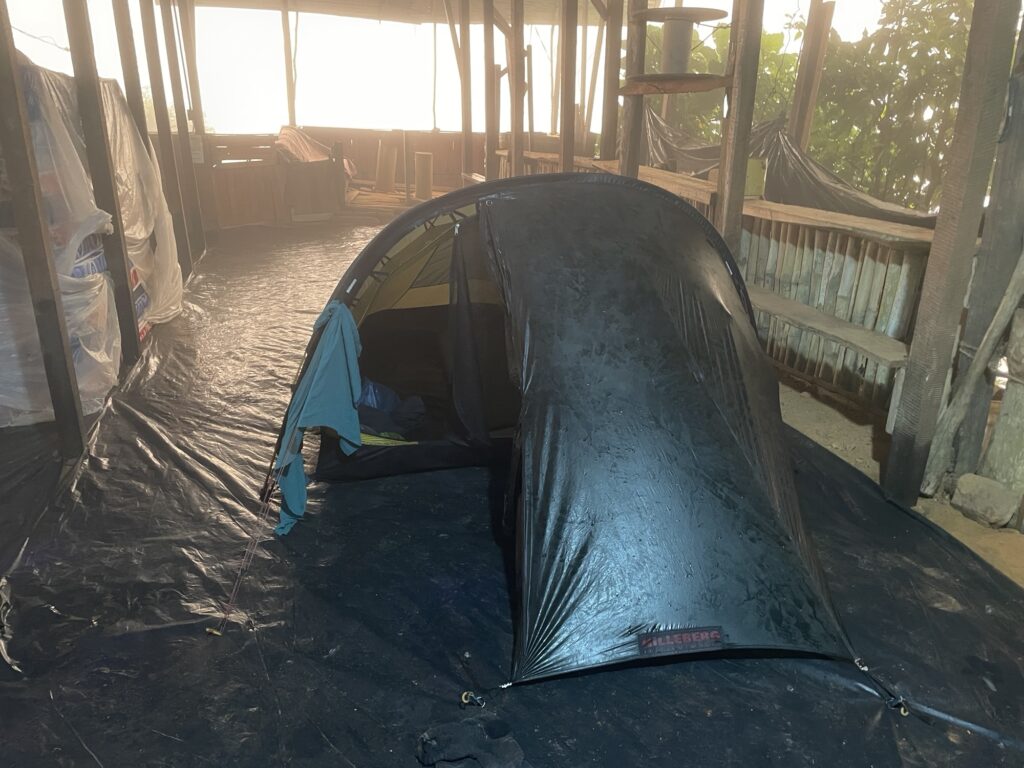
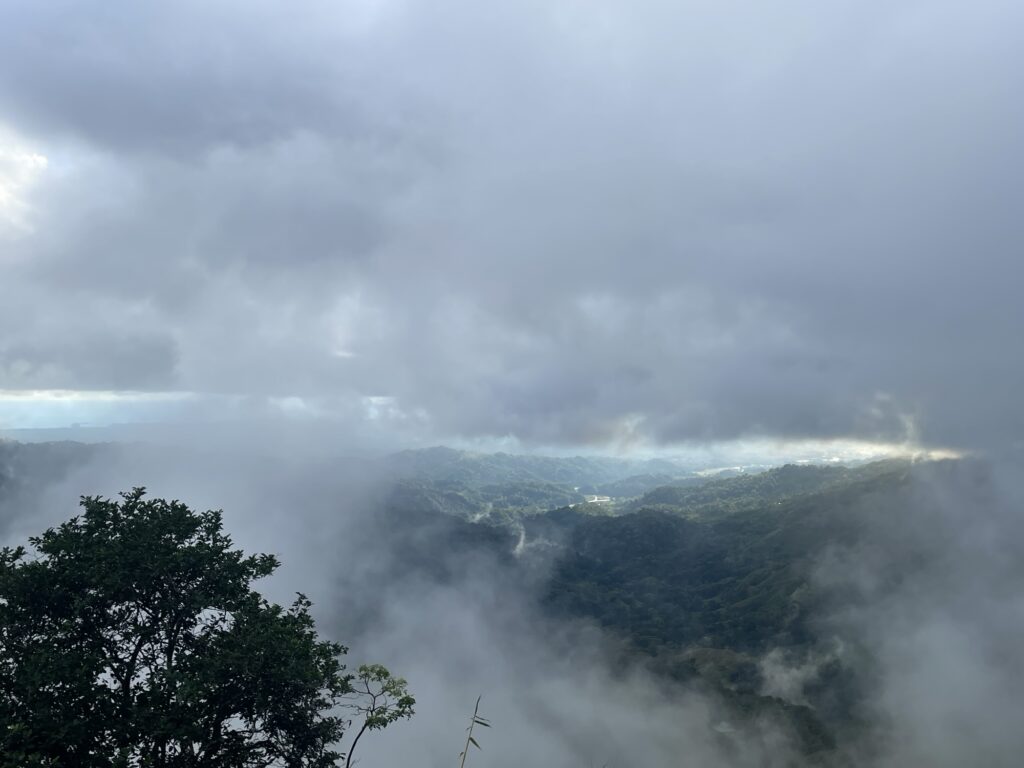
The under roof campsites has some merit in Costa Rica after all, I guess. When it rains it rains. I’m amazed by the intensity. I have only experienced this type of powerful rain once before in my life — and that was when I was caught running in the rain storm that collapsed the road leading to Zermatt in 2024 which caught quite a lot media attention at the time. Hopefully no rain tomorrow, this is supposed to be the dry season after all.
8 December — Monday
Last day! At dawn I’m away. Section 15 and 16 totals about 38 km according to the FarOut guide map. My hopes for the day are low, but I’m all for happy surprises.
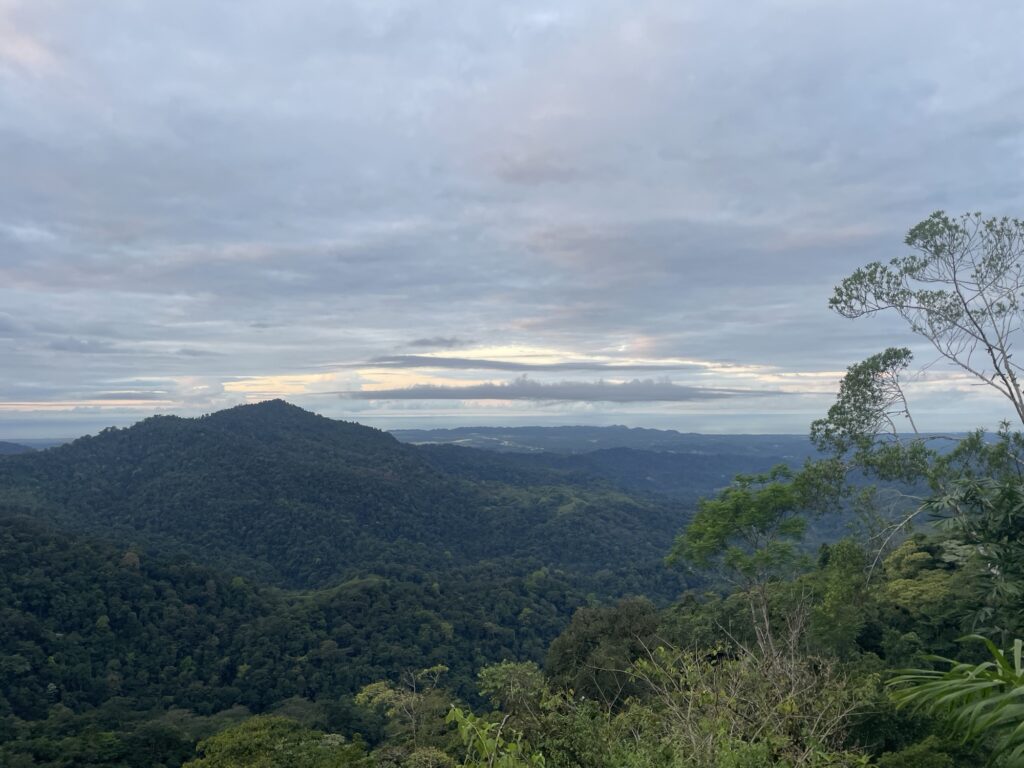
Section 15 is largely similar to section 14, a long gentle descent along the mountain side. This time I got to experience the views.
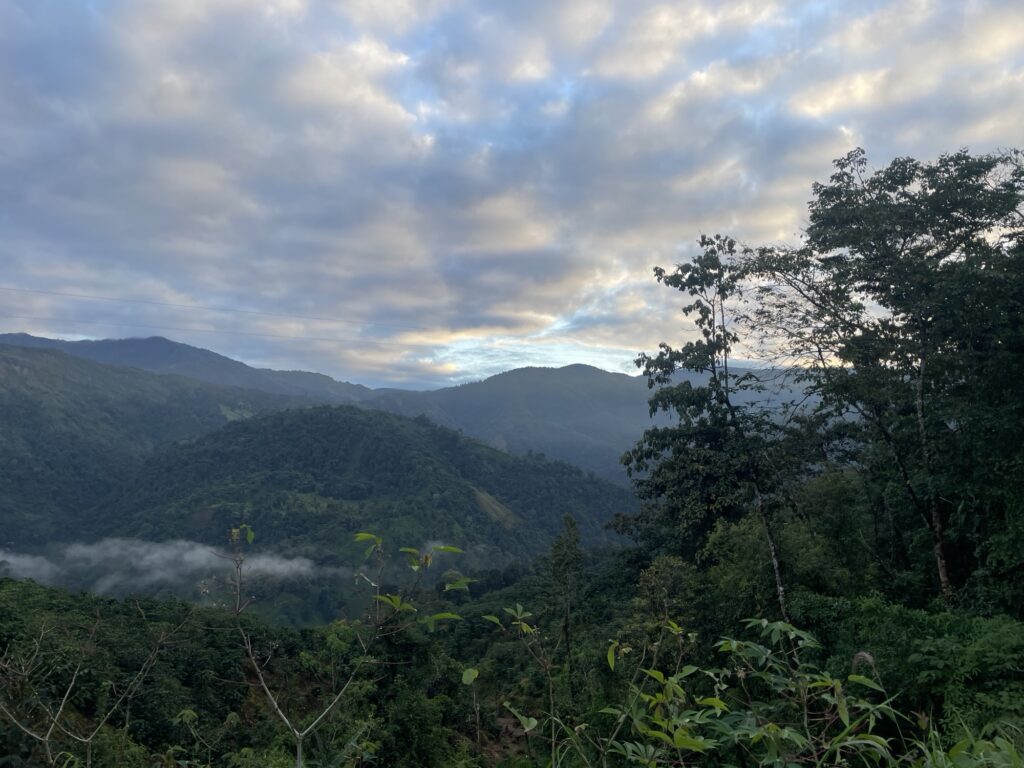
The last and final section, section 16, is absolute garbage. It is purely a race to the finish line. It is along this section that I for the first time meet fellow Camino de Costa Rica hikers, a group of 7 hikers that seems to be doing a guided tour and a couple that just started hiking from Quepos. They ask me with big anticipation in their eyes, “How was it?” I’m trying really hard to compose myself and not completely rain on their parade. I failed, sorry guys.
Finally! I’m in Quepos, the trail is finished, the Patagonia warmup is completed. That was the Camino de Costa Rica, the best long distance hiking Costa Rica has to offer. As the reader might have guessed, I’m not impressed. I love the concept of ocean to ocean hiking across the country, but the execution leave much to be desired. Section 3, 4, 8, and 10 — where I hiked an alternative route — was enjoyable, the rest not so much. My recommendation, hike somewhere else.
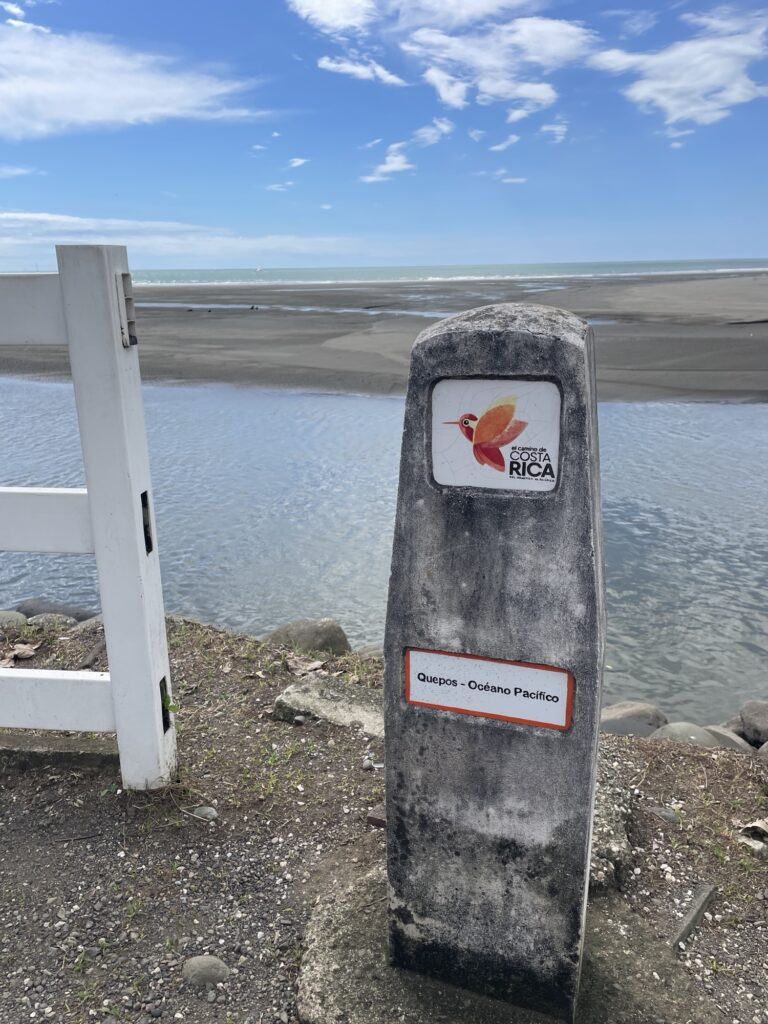
In Quepos I take the 14:00 bus to Jaco — all roads leads to Jaco — where I will relax and prepare for Patagonia. My plane to Santiago de Chile leaves on Thursday.
I will finish this day with a long rant about everything that is wrong with the Camino de Costa Rica. There is too much asphalt and gravel, and way too little trails. Much sections are lined with barbed wire, thereby prohibiting such a simple thing as sitting down to rest while enjoying nature — and it instills a feeling of being trapped. Sitting directly on a dirt road is not super inspiring. For most of the section signs are lacking or completely missing. A GPS is required. Accommodation is hard to solve on the fly, leaving little room for going with the flow. Many accommodations are closed for no apparent reason, at least when I hiked. Finding nice tenting spots is a hopeless endeavor. A guide for section 3 and 4 is ridiculous, the motivation being it is wild jungle that requires experience. It is literally a wide open path, stepping on a snake requires extreme carelessness. Not a critique to the trail, but the FarOut map misses several resupply options and other information. Online forums will suggest that the Camino is suitable for trail running, it is not as it misses one critical component, a trail. I can go on but now I’m going to sleep, rant over, Martin out.
9 December — Tuesday
A day of relaxing, taking care of my equipment — the extreme humidity has not been kind — and a lot of work on increasing my fat reserves for Patagonia. All that eating is a workout by itself.
I managed to find a really nice group of people at the hostel to hang out with. It is a mix of Canadians, Americans and Norwegians, almost everyone met each other at the hostel.
10 December — Wednesday
A day of food related workouts and an actual workout. One of my Norwegian hostel roommates, also named Martin, is here to board the Norwegian ship Statsraad Lehmkuhl, which is a traditional more than century old sail-ship that sails around the world engaging in various research activities. Martin will join as a crew member for 10-days and help sail the ship from Costa Rica to Colombia. My friend Andreas actually told me about this ship when we sailed together this summer. I figured that today I will run to Herradura, the harbor where the ship is docked, and check it out.
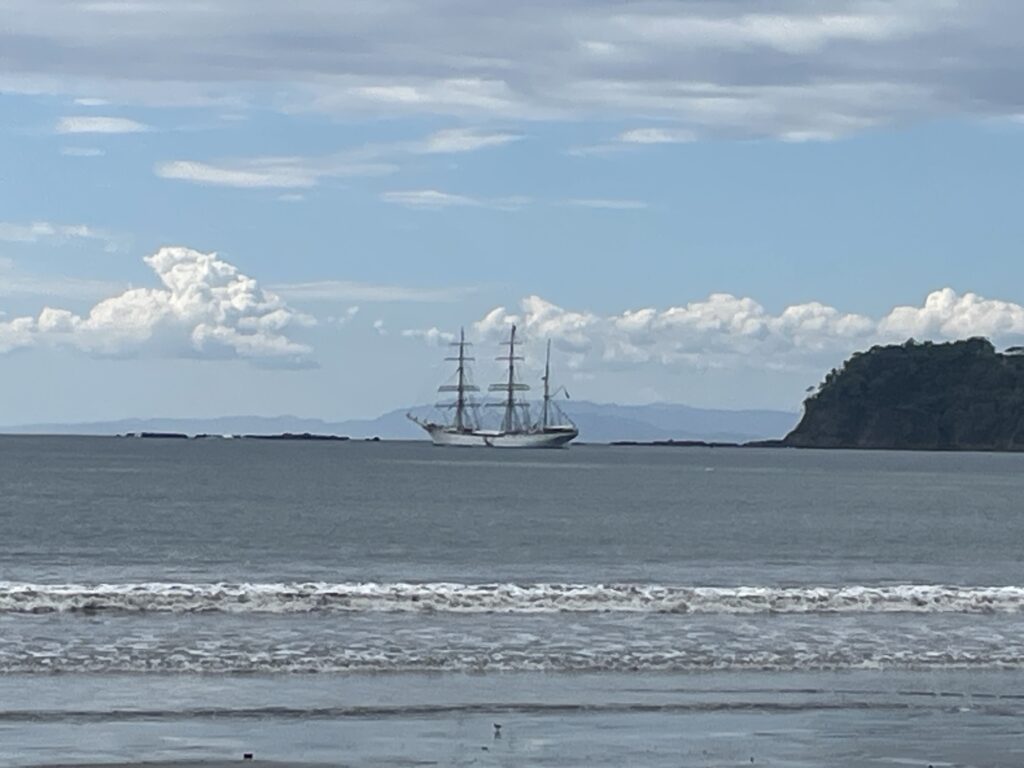
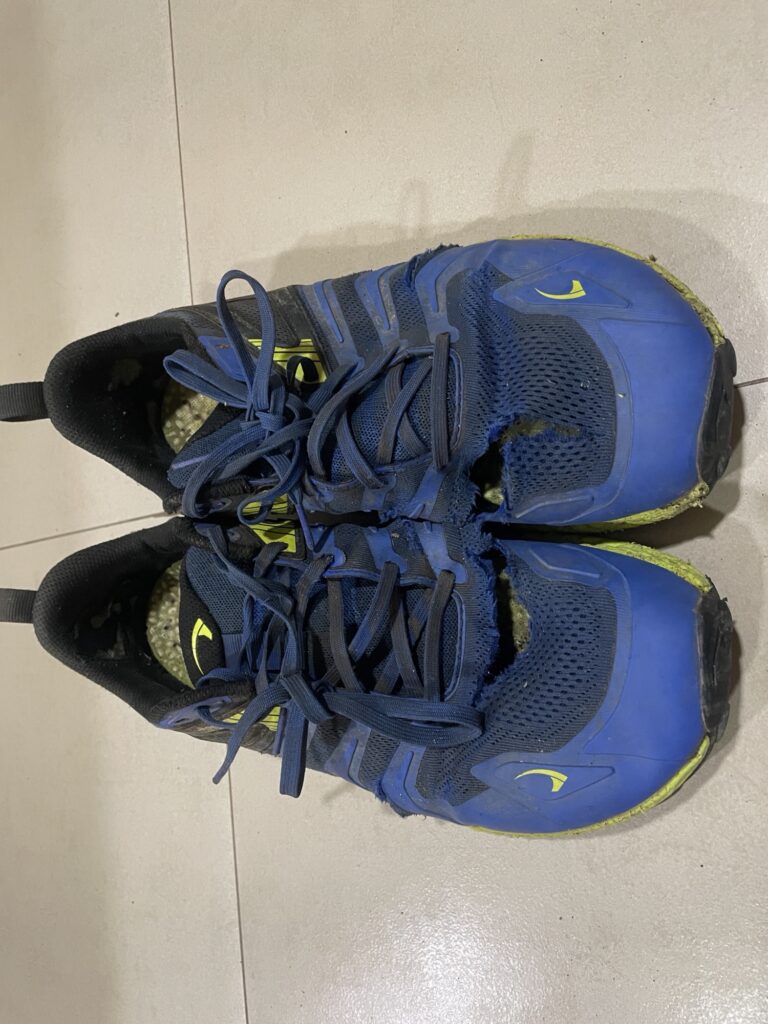
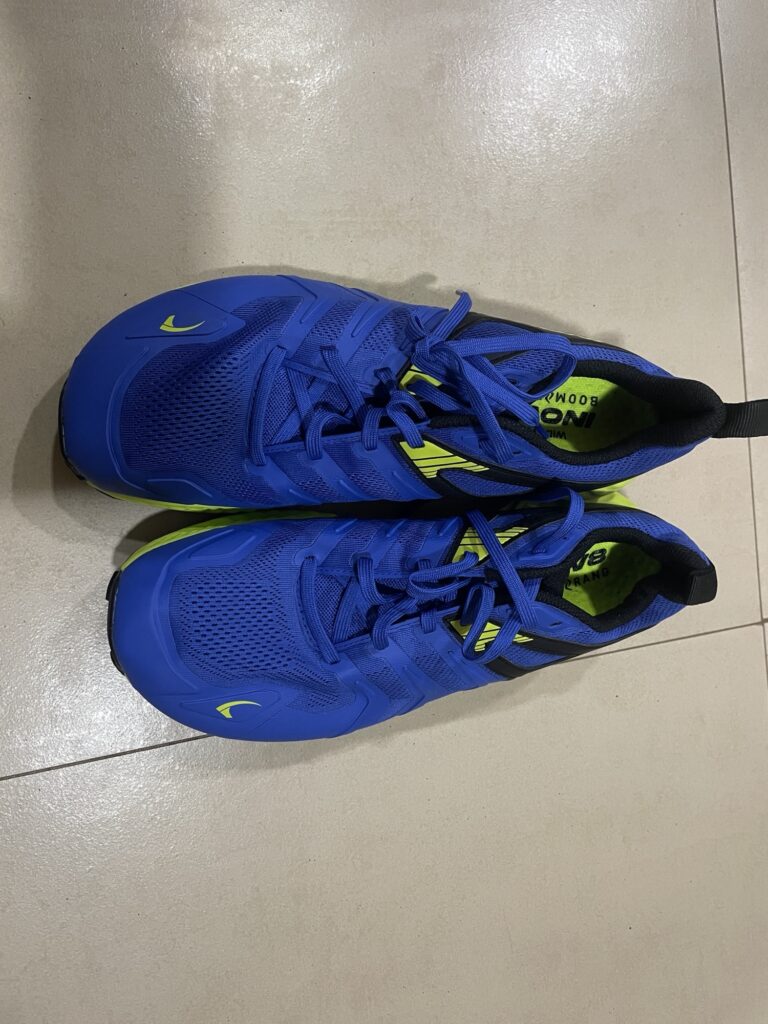
At Herradura, I eat, swim, sleep and then I run back to the hostel. With the run completed, it is time to make my goodbyes to a very faithful and loyal friend that has served me impeccably during my travels. I’m of course talking about my INOV-8 TRAILTALON (no affiliation, but would very much like to have 😉 ). It is the best all round shoe I have ever owned. I’m very impressed by the durability, I have not been kind. Honestly, they have a few more miles in them, but for Patagonia I’m starting fresh. Starting long distance hiking with a completely new pair of shoes is rarely optimal, there is a high possibility that I might have to part ways with a few toenails as well, we will see.
Speaking of equipment, I also have to part ways with my Black Diamond Carbon Distance hiking poles. I have had them for years, and until now I only had positive things to say. However, the humidity in Costa Rica has broken them. It is hard to explain but essentially they have corroded to the point that I no longer can use them, partly due to a bad design from Black Diamond which makes it impossible to address the corroded area. A google search somewhat confirms that this is an issue with the poles and as I concluded there is not much to be done other than getting new ones. So yeah, Black Diamonds hiking poles, absolutely awesome if not hiking in warm, humid and salty climates.
11 December — Thursday
At 09:00 I’m picked up at the hotel by the shared shuttle service I booked to take me to the airport. After a long wait I board my plane to Bogota and then Santiago. Tomorrow I will wake up in Santiago ready to start hiking, after some new gear purchases.
That concludes my Costa Rica experience. I feel similar as I did with Peru. I had a great time but I have no desire to come back. I experienced everything I wanted to except Corcovado. The Costa Ricans are friendly and the country is beautiful but very difficult to enjoy the way I like to. And official information is hard to come by or just straight out incorrect. It is a complicated country to navigate by yourself. I feel like many blog posts that aims to provide information about various activities are written by people whom have never actually been there. Costa Rica is also surprisingly expensive. And I could do without this extreme humidity. The food though is amazing.